Congratulations to the PFF Scholar award recipients!
-
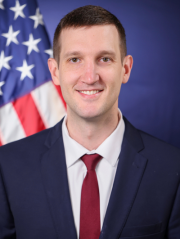
Daniel Guidot, MD, MPH
Institute for Medical Research, Durham
Proposal Title: Understanding Barriers to PF Care Delivery to Design an Improved PF Treatment Approach
This proposal is funded by the Jenny H. Krauss and Otto F. Krauss Charitable Foundation Trust, in memory of Stephen N. Dirks
Dr. Daniel Guidot is an Advanced Fellow in Geriatrics and a Staff Pulmonologist at the Durham Veterans Affairs (VA) Health Care System in the Geriatric Research, Education, and Clinical Center (GRECC) and the Division of Pulmonary and Critical Care. He completed his medical doctorate from Emory University, internal medicine residency at the University of Texas Southwestern, and pulmonary and critical care fellowship at Duke University Medical Center, all universities affiliated with a VA medical center. Dr. Guidot has research training in pulmonary, geriatrics, and health services, disciplines he combines to advance timely treatment delivery for patients with idiopathic pulmonary fibrosis (IPF).Patients with IPF face high symptom burden, significant debility, and poor survival. Effective treatments exist in IPF. Antifibrotic medications improve survival and reduce exacerbations, and pulmonary rehabilitation improves functional capacity and quality of life. However, treatment rates in IPF remain too low. Dr. Guidot applies geriatric and health services research principles to identify age-related and other barriers to care. Long-term, Dr. Guidot seeks to innovate how IPF care is delivered to improve implementation of high-quality, age-friendly care for patients with IPF. He owes his success to a talented, generous team of mentors in pulmonary, geriatrics, and health services. -
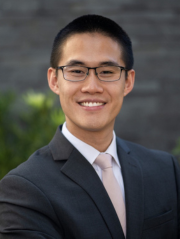
Jonathan Chang, MD
Trustees of Boston University
Proposal Title: Modeling pulmonary fibrosis using patient-specific iPSCs carrying telomerase mutations
This proposal is funded by Boehringer Ingelheim Pharmaceuticals, Inc.
Dr. Jonathan Chang is a Pulmonary and Critical Care Medicine Fellow and Postdoctoral Research Fellow in the Section of Pulmonary, Allergy, Sleep & Critical Care Medicine at Boston University. He obtained his MD at Duke University, MPH at University of North Carolina, and training in internal medicine at Harvard/Brigham and Women’s Hospital. He is currently a NHLBI T32 research fellow mentored by Dr. Kostas Alysandratos and Dr. Darrell Kotton, working to build preclinical human models of pulmonary fibrosis using induced pluripotent stem cells. As a board-certified pulmonologist, he also devotes a portion of his time to seeing patients in clinic, including those with interstitial lung diseases and pulmonary fibrosis. He aspires to be an independently-funded physician-scientist dedicated to uncovering better mechanistic understanding of pulmonary fibrosis and interstitial lung diseases with hopes of this new knowledge translating to more effective therapies for patients. Outside of the lab and hospital, he enjoys spending time with his wife and young daughter. -
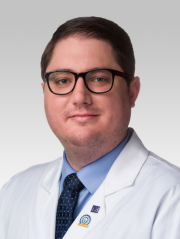
Anthony J. Esposito, MD
Northwestern University Feinberg School of Medicine
Proposal Title: Mutimodal Machine Learning Modeling to Predict Outcomes from Systemic Sclerosis-Associated ILD
This proposal is funded by Innovia Foundation
Dr. Anthony J. Esposito is Assistant Professor of Medicine in the Division of Pulmonary and Critical Care at Northwestern University Feinberg School of Medicine. He received his Bachelor of Arts degree in biochemistry and molecular biology (summa cum laude with distinction) and medical degree (magna cum laude) from Boston University. He then completed an internal medicine residency at University of Washington and a pulmonary and critical care medicine fellowship through the Harvard-Brigham and Women’s Hospital program. In the latter, he was supported by NHLBI T32, F32, and extramural loan repayment awards to conduct translational research. At Northwestern, Dr. Esposito serves as the Director of Scientific and Translational Research in Interstitial Lung Disease (ILD) and Co-Director of the Scleroderma Program. His primary clinical interest is management of patients with ILD associated with systemic autoimmune rheumatic diseases. His overarching research aim is to individualize approaches to detection and treatment of ILD by identifying individuals at risk for progressive disease and initiating targeted therapies to prevent loss of lung function and improve patient-centered outcomes. In his proposal, Dr. Esposito will utilize artificial intelligence methods to identify clinical and imaging biomarkers of progressive ILD and death in patients with scleroderma to optimize timing and selection of therapy. -
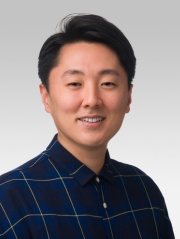
Atsushi Suzuki, PhD, MD
Northwestern University Feinberg School of Medicine
Proposal Title: Targeting mitochondrial ETC complex IV in profibrotic monocyte-derived alveolar macrophages for the treatment of pulmonary fibrosis
This proposal is funded by Shomola
Dr. Atsushi Suzuki is a Research Associate in the Division of Pulmonary and Critical Care at Northwestern University Feinberg School of Medicine. He is a physician-scientist specializing in pulmonary fibrosis and other lung diseases, with broad expertise spanning clinical, translational, and basic research. Although his early career focused on clinical research, his growing interest in lung biology and the development of new treatments led him to pursue basic and translational investigations. He completed his PhD at Nagoya University, where he studied novel anti-fibrotic molecules targeting lung fibroblasts. His current research focuses on investigating the mechanisms that control the development and phenotypic maintenance of profibrotic macrophages. He is leveraging multi-omics approaches, lineage tracing systems, animal models of pulmonary fibrosis, and novel drug delivery technologies in the pursuit of new and effective treatments.
-
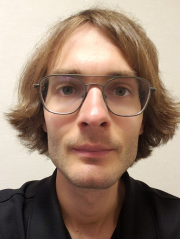
Jack Wellmerling, PhD
Mayo Clinic, Rochester, MN
Proposal Title: Role of NFATs in driving pathologic fibroblast states
This proposal is funded by Boehringer Ingelheim Pharmaceuticals, Inc.
Jack Wellmerling is a postdoctoral researcher in the department of physiology and biomedical engineering at Mayo Clinic in Rochester, Minnesota. Jack completed his undergraduate studies in biomedical engineering at Ohio State University, where he subsequently completed his PhD in biophysics studying cystic fibrosis and COPD in the laboratory of Estelle Cormet-Boyaka. Following graduate school, Jack became interested in pulmonary fibrosis and joined the laboratories of Qi Tan and Daniel Tschumperlin at Mayo Clinic. Jack has been studying the transcriptional origin of pathologic fibroblasts in PF using a combination of computational and experimental models. These include single-cell RNA sequencing, culture of primary human lung fibroblasts, and precision cut lung slices. Specifically, Jack is interested in the role that transcription factors in the nuclear factor of activated T cells (NFAT) family play in pathologic fibroblast activation.