A Caregiver’s Journey, in Honor of National Family Caregiver’s Month
When my wife, Heather, was diagnosed with idiopathic pulmonary fibrosis (IPF) in February 2013, we were still dating. She had developed a cough that would not go away, and eventually I convinced her to see her primary care doctor. That visit led to a pulmonologist and, ultimately, an IPF diagnosis.
I had never heard of IPF before. Heather knew more about pulmonary fibrosis (PF) because both her father and grandfather had died from the disease. Understandably, she was frightened.
From that moment, I made a commitment: Heather was not going to face this alone. I decided I would be there for every clinic appointment and doctor visit. I needed to learn as much as I could, ask questions and understand what might be ahead for us.
A role that kept changing
Heather and I married in 2015. We spent our first wedding anniversary in the hospital.
Heather has a TERT mutation and short telomeres, and in 2016 she developed oral cancer that required surgery. For several months afterward, nearly everything she ate had to go through a blender.
That experience taught me a lot about caring for someone you love, but pulmonary fibrosis brought different challenges. Because PF is progressive, I found that my role progressed with it. That is something I wish more people understood. Your responsibilities can start small and gradually become bigger. You have to adjust as your loved one’s needs change.
This is a balancing act. Heather still wanted to do everything she could, while I often found myself saying, “Let’s slow down. Let’s take it easy.”
Preparing for transplant
We were fortunate to receive Heather’s care at UT Southwestern Medical Center, a PFF Care Center Network site.
In May 2019, Heather began the lung transplant evaluation process. At first, doctors determined that she was still too healthy to be listed. But her condition worsened throughout the summer, and she was officially listed for transplant on September 16, 2019.
Within a week, we received our first call.
We were sitting on the couch around 5 p.m. when the phone rang asking whether we could get to the hospital. We had assumed we would wait weeks for that call. Ultimately, it became what transplant families call a “dry run” because the donor lungs were not suitable.
Then, a few weeks later, around midnight on October 10, we received another call. We were told to be at the hospital the next morning.
On October 12, Heather received a double-lung transplant. That started a completely new chapter for both of us.
Caregivers need caregivers, too
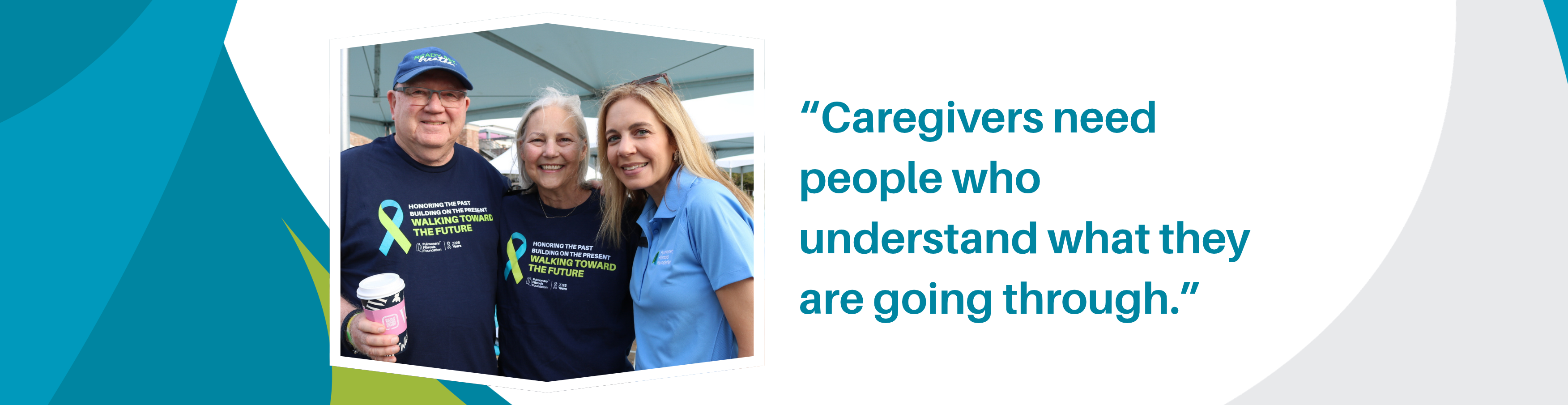
One of the most important things I learned is that caregivers need people who understand what they are going through.
I encourage caregivers to find a support group or connect directly with someone who has been in their shoes, whether over coffee, on Zoom or by phone. The PFF offers Caring Conversations, a monthly support group specifically for caregivers, and I highly recommend it. There are some questions only another caregiver can answer. The PFF also has a For the Caregiver page on its website with resources that may be helpful along the way.
People will often say, “Let me know if there is anything I can do.” My advice is to take them up on it and be specific. Ask someone to stay with your loved one while you exercise, see friends, run errands or simply take some time for yourself. And do not stop being yourself. The things you enjoyed before becoming a caregiver still matter.
Taking care of yourself is not separate from caring for someone else. It is part of what allows you to keep showing up for them.
What I wish I had known
After Heather’s transplant, she went from taking very few medications to taking more than 40 pills a day. I wish someone had warned me how much the medications, stress, and recovery could affect a person emotionally.
Patience may be the biggest lesson this experience has taught me. Sometimes you have to pause, give each other some grace, and remember what both of you are going through.
I also learned the importance of being open with family and friends about what we were going through. When Heather began using oxygen, we didn't always share her condition with others. As a result, friends and family we hadn't seen in several months would be surprised to see her using oxygen, unsure of what had happened in the time since we'd last been together.
Looking back, I wish we had talked more openly about pulmonary fibrosis. Sharing what you are going through gives people the opportunity to understand, support you, and learn about a disease they may never have heard of before.
Seven years later
Heather recently celebrated her seven-year “lungaversary.”
Today, my role looks completely different. She has regained her independence, returned to many of the things she did before transplant, and we are traveling again.
There are still challenges, but looking back, I know how important it was for Heather to have someone beside her through all of this. I also know how important it was for me to find people who could be there for me.
If I could offer one piece of advice to another caregiver, it would be this: Be patient, ask for help, and remember to take care of yourself, too. You do not have to figure everything out alone.
About the Pulmonary Fibrosis Foundation
At the Pulmonary Fibrosis Foundation, we are dedicated to making a difference in the lives of those affected by pulmonary fibrosis (PF), a form of interstitial lung disease (ILD). Pulmonary fibrosis is a process that causes lung scarring, in which fibrotic tissue blocks the movement of oxygen from inside the tiny air sacs in the lungs into the bloodstream. Low oxygen levels, and the stiff scar tissue itself, can cause people with pulmonary fibrosis to feel short of breath, particularly when walking and exercising. Over 250,000 Americans are living with PF today. Approximately 50,000 new cases are diagnosed each year and as many as 40,000 Americans die from idiopathic pulmonary fibrosis (IPF) each year.
As the largest organization committed to raising awareness and providing support, our mission is to accelerate the development of new treatments and ultimately a cure for pulmonary fibrosis. Until this goal is achieved, the PFF is committed to advancing improved care of patients with PF and providing unequaled support and education resources for patients, caregivers, family members, and healthcare providers.
Sign Up For Our Emails
Connect with Us